for those who take their crunch and craft - seriously!

Traditional Napa Cabbage Kimchi (Baechu Kimchi – 배추김치)
Hands Red, Hearts Full - It's Kimjang Season
2 min read
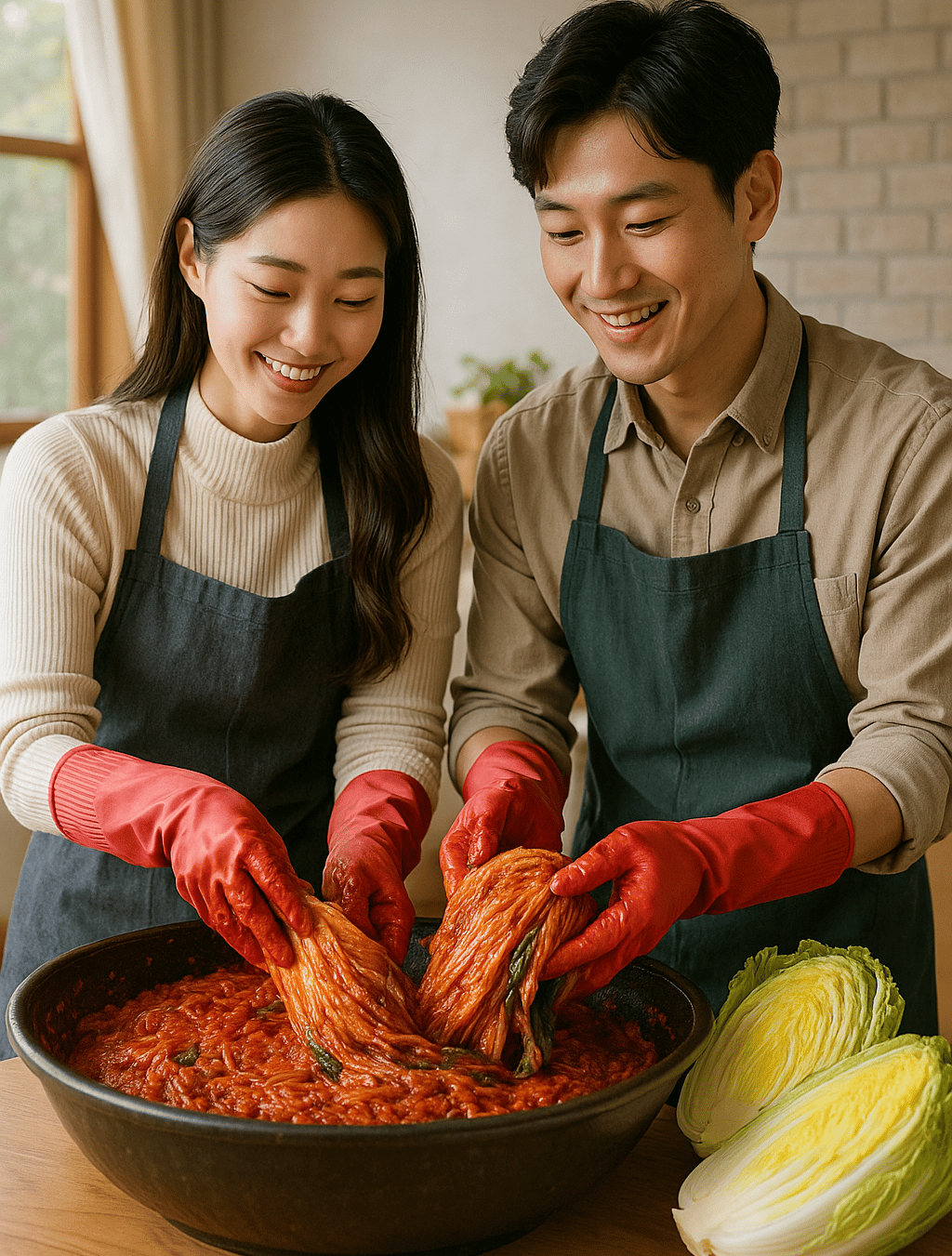

Every November in Korea, as the air turns crisp and the markets brim with napa cabbage, kitchens transform into fermentation factories. Kimjang isn’t just about making kimchi — it’s a full-blown social event, equal parts cooking, gossip, and garlic. Friends and families gather around mountains of cabbage, sleeves rolled up, hands dyed red from gochugaru. The result? Dozens of jars packed tight with spice, salt, and care — enough to last the winter, and long enough to spark a few stories along the way.
🥬 Ingredients (for 2 medium napa cabbages, about 3–4 kg total)
For salting:
2 medium napa cabbages (baechu)
1 cup coarse Korean sea salt (cheonilyeom)
10 cups cold water
For the porridge (base for seasoning):
2 cups water
2 tbsp sweet rice flour (glutinous rice flour)
1 tbsp sugar
For the seasoning paste:
1 cup Korean red chili pepper flakes (gochugaru) — adjust to taste
1 cup Korean fish sauce (aekjeot) or 2 tbsp salted shrimp (saeujeot)
1 tbsp minced garlic (about 10 cloves)
1 tsp grated ginger
1 small onion, grated or minced
3–4 scallions, chopped
1 small Korean radish (mu), julienned (about 2 cups)
1 medium carrot, julienned
½ Korean pear or apple, grated (optional for sweetness)
🥣 Instructions
1. Salt the cabbage
Cut cabbages lengthwise into quarters. Rinse and drain.
Sprinkle salt between each leaf, focusing near the stems (thicker parts).
Place the cabbages in a large basin and pour over the salted water.
Let sit for 6–8 hours, turning occasionally until leaves soften.
Rinse thoroughly 2–3 times to remove excess salt, then drain well for 30 minutes.
2. Make the porridge
In a small pot, mix rice flour with water.
Bring to a boil over medium heat, stirring until thickened and translucent (about 5 minutes).
Add sugar, stir, and let cool completely.
3. Prepare the seasoning paste
Combine the cooled porridge with gochugaru, fish sauce (or shrimp), garlic, ginger, onion, and fruit (if using).
Add the julienned radish, carrot, and scallions. Mix well to form a thick paste.
4. Season the cabbage
Wearing kitchen gloves, spread the seasoning paste evenly between each cabbage leaf, from outer to inner.
Fold each quarter into a compact bundle and place it in a large airtight container or onggi (earthenware crock).
5. Ferment
Leave the container at room temperature (18–20°C / 64–68°F) for 1–2 days until small bubbles form and it smells pleasantly tangy.
Transfer to the refrigerator to slow fermentation.
Kimchi is ready to eat fresh but is best after 5–7 days of aging. It continues to develop richer flavors over several weeks.
Tips for Perfect Kimchi
Use Korean sea salt and gochugaru — they’re milder and give kimchi its authentic flavor and color.
Don’t oversalt; the cabbage should taste mildly salty after brining.
If it ferments too fast, refrigerate sooner.
Leftover seasoning paste can flavor soups or stir-fries.
🍚 Serving Suggestions
Enjoy kimchi with steamed rice, grilled pork belly (samgyeopsal), or in stews like kimchi jjigae. It’s also the foundation for fried rice, pancakes, and dumplings.

